
Choosing a software development partner is not simply about finding a team that can write code. The wrong partner can create delays, unclear requirements, weak communication and expensive rework, while the right fit should bring technical expertise, structured delivery and a clear understanding of your business objectives.
The best way to evaluate a software development partner USA businesses can work with is to assess technical capability, relevant experience, development processes, communication, security, project management, scalability and long-term support before making a decision. Price matters, but it shouldn't be the first or only filter.
For a B2B company, the goal is to find a technology partner that can understand the business problem, recommend the right solution and remain accountable throughout the software lifecycle. The evaluation criteria below are designed around that decision.
What Makes a Strong Software Development Partner?
A strong Software Development Partner should combine technical capability with business understanding. You aren't only paying for development hours. You're investing in the team's ability to turn requirements into a reliable, scalable product.
Before entering serious discussions, look for evidence of:
- Relevant Technical Expertise
- Experience with comparable projects
- Strong Software Architecture capabilities
- A clearly defined development process
- Effective Project Management
- Reliable Quality Assurance
- Strong Security Practices
- Transparent communication
- Post-launch Technical Support
- The ability to scale with future requirements
A capable partner should also be comfortable explaining why a particular technology, architecture or delivery method is suitable for your project. If every answer centres on tools and frameworks but ignores business outcomes, that's a warning sign.
For example, a technically impressive team may still be a poor fit if it can't work with your existing systems, understand your industry requirements or communicate project risks clearly.
How Should You Evaluate a Software Development Company's Technical Expertise?
Don't evaluate technical expertise by counting technologies on a website. Instead, examine how the team applies technology to solve real business problems.
Ask potential partners to explain how they would approach your requirements, including architecture, integrations, security, scalability and testing. Their answers should demonstrate practical experience rather than simply listing programming languages or frameworks.
Look for evidence of:
- Modern application architecture
- API and third-party integrations
- Cloud development
- Database design
- Application security
- Automated testing
- Performance optimisation
- CI/CD and deployment practices
- Scalability planning
A good technical discussion should also reveal how the team handles trade-offs. There is rarely one perfect technology choice. The right decision depends on requirements, budget, performance expectations and future maintenance.
If you are comparing a Software Development Company, review its previous work, technical case studies and development process alongside its technology stack. This gives you a better picture of how technical expertise translates into actual delivery.
Start With a Technical Discussion
Have a software project in mind? Share your requirements and discuss the technical challenges before committing to a development roadmap.
Does Industry and Project Experience Matter?
Yes, but relevant experience matters more than a long list of unrelated projects.
A partner doesn't necessarily need to have built exactly the same product. What matters is whether it has dealt with similar technical challenges, business workflows, integrations, user requirements or scalability demands.
For example, if your project involves complex enterprise workflows, look for experience with enterprise applications rather than relying on general web development experience.
When reviewing previous projects, ask:
- What business problem did the project solve?
- What was the technical complexity?
- What integrations were required?
- How was scalability handled?
- What challenges appeared during development?
- How did the team respond to changing requirements?
- What support was provided after launch?
This gives you much more useful information than simply looking at a portfolio of screenshots.
How Do You Evaluate the Development Process and Project Management?
A strong Project Management process should make progress visible and responsibilities clear. You should understand how requirements are documented, how work is prioritised, how changes are managed and how issues are escalated.
Ask how the partner handles:
- Discovery and requirements
- Project planning
- Milestones
- Sprint or release planning
- Progress reporting
- Scope changes
- Risk management
- Testing and approvals
- Deployment
- Post-launch support
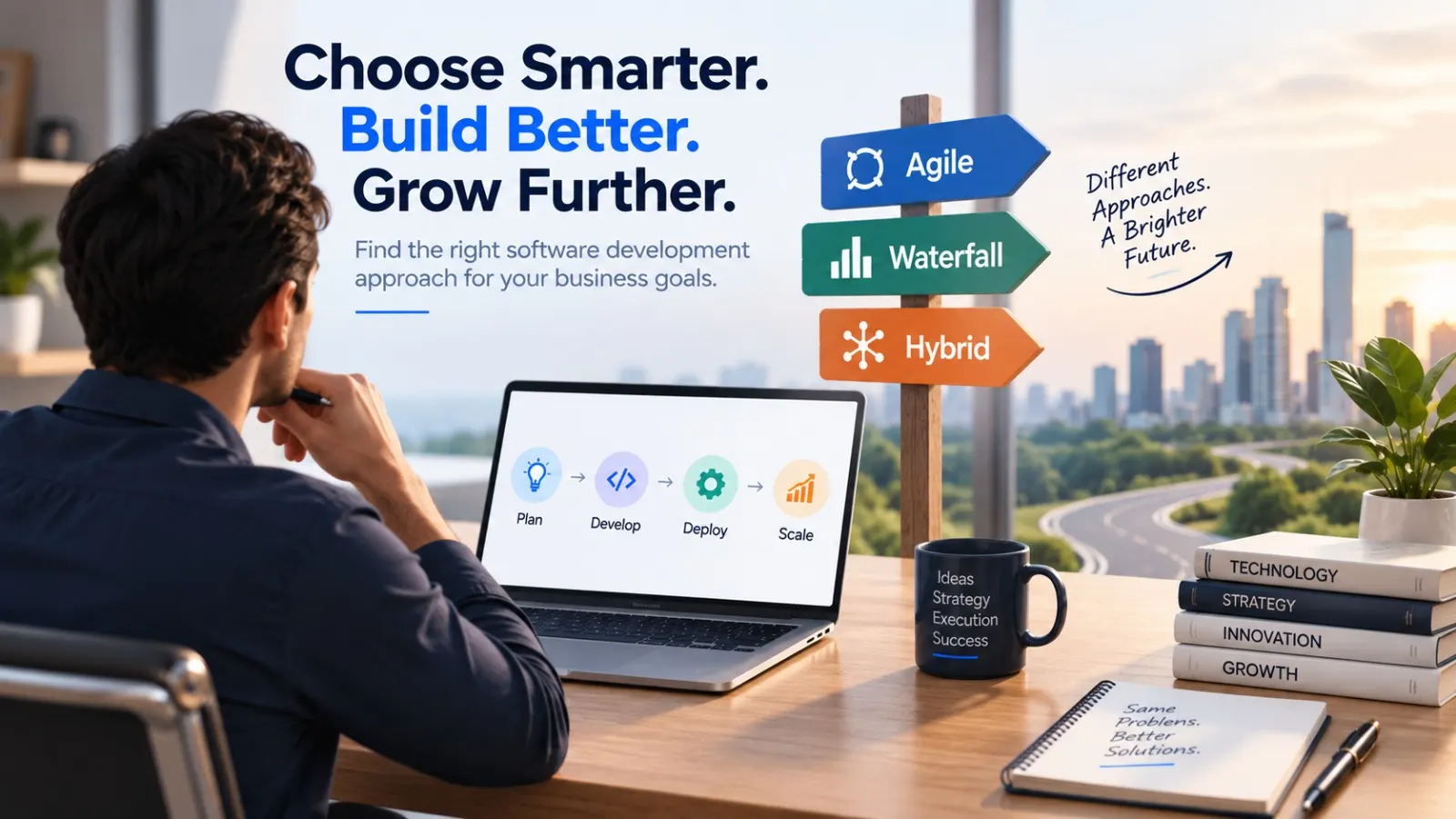
The development model should also match your project. An evolving product may benefit from an iterative delivery model, while a highly defined project may require more upfront planning.
This is where understanding the software development approach USA businesses use becomes important. The methodology should be selected according to project complexity, requirements, stakeholder involvement and delivery objectives, rather than because a particular model happens to be popular.
A mature provider should be able to explain its process in business terms, not hide behind technical terminology.
How Important Are Security and Data Protection?
Security should be evaluated before development begins, not after the first version is ready.
Your development partner may have access to source code, business information, databases, infrastructure and intellectual property. That makes Security Practices a core selection criterion.
Ask potential partners about:
- Secure development practices
- Access controls
- Source-code protection
- Data handling
- Authentication and authorisation
- Vulnerability testing
- Dependency management
- Secure environments
- Backup and recovery
- Incident response
You should also clarify ownership of source code, intellectual property and project assets in the contractual agreement.
A trustworthy partner shouldn't become defensive when you ask detailed security questions. It should be able to explain how security is incorporated into development, testing, deployment and ongoing maintenance.
How Can You Assess Quality Assurance Before Signing?
Don't wait until development begins to ask how quality will be measured.
A mature Quality Assurance process should cover more than basic functional testing. Depending on the project, it may include unit testing, integration testing, end-to-end testing, performance testing, security testing and regression testing.
Ask:
- Who is responsible for QA?
- When does testing begin?
- What testing tools and processes are used?
- How are defects prioritised?
- How are releases approved?
- What happens when critical issues are discovered?
- Is testing repeated after major changes?
The answers can tell you whether quality is built into the development lifecycle or treated as a final checkpoint.
What Should a B2B Company Ask Before Selecting a Partner?
Before making the final decision, ask questions that reveal how the provider actually works.
Useful questions include:
- Have you delivered projects with similar technical complexity?
- How do you manage changing requirements?
- Who will manage our project?
- Who owns the source code?
- How do you handle security?
- How is QA incorporated into development?
- How will we track progress?
- What happens if the timeline changes?
- What support is available after launch?
- How will the solution scale as our requirements grow?
You can also ask the team to walk through a realistic scenario from your project. Their response can reveal how well they understand your requirements and whether they think beyond development alone.
Evaluate More Than the Proposal
A software proposal tells you what a provider intends to deliver. The evaluation process should tell you whether the team can actually deliver it.
What Should the Final Selection Process Look Like?
Once you've evaluated several providers, create a structured comparison instead of making the decision from one sales meeting.
Score each provider internally against your own business criteria, such as:
| Evaluation Area | What to Examine |
|---|---|
| Technical expertise | Architecture, technology and engineering capability |
| Relevant experience | Similar business and technical challenges |
| Development process | Planning, delivery and change management |
| Quality assurance | Testing depth and release controls |
| Security | Data, code and infrastructure protection |
| Communication | Reporting, meetings and escalation |
| Project management | Milestones, risks and accountability |
| Scalability | Ability to support future growth |
| Support | Maintenance and post-launch assistance |
| Commercial model | Scope, transparency and overall value |
The purpose isn't to choose the provider with the biggest portfolio or lowest price. It's to identify the team that aligns most closely with your project's requirements and operating model.
Conclusion: Choose a Partner, Not Just a Vendor
Evaluating a software development partner should go far beyond comparing prices or technical buzzwords. The right B2B technology relationship depends on technical expertise, relevant experience, transparent project management, strong quality assurance, security, communication and the ability to support the product beyond its initial launch.
Before selecting a Software Development Company USA businesses can rely on, make sure the provider understands your business objectives as well as your technical requirements. Ask difficult questions early, examine evidence rather than promises and make sure responsibilities, ownership, security and support are clearly defined.
Meetri Infotech works with businesses on custom software development and technology solutions, with its process covering discovery, design, development, testing, deployment and ongoing maintenance.
A thoughtful selection process gives you a better foundation for the partnership and helps ensure that the technology investment supports your business goals over the long term.
Get in Touch with us to discuss your project requirements and explore how the right development partnership can support your next software initiative.
A little more clarity
Frequently asked questions
How do I choose a software development partner in the USA?
Evaluate the provider's technical expertise, relevant project experience, development process, security practices, quality assurance, communication, scalability and post-launch support. Compare these factors against your specific business and technical requirements rather than choosing based on price alone.
What should I look for in a software development partner?
Look for a partner that understands your business objectives, has relevant technical experience, follows a transparent development process and can provide clear answers about architecture, security, testing, communication and long-term support.
How do I evaluate a development team's technical expertise?
Review relevant projects, architecture capabilities, technology experience, testing practices, security processes and approach to scalability. Ask the team to explain how it would solve a realistic technical challenge from your project.
What questions should I ask a software development company?
Ask about similar projects, team structure, development methodology, project management, security, source-code ownership, QA, communication, change management, deployment and post-launch support.
How much does software development outsourcing cost in the USA?
There isn't a single cost because pricing depends on project scope, complexity, technology requirements, team composition, development model, integrations, testing and ongoing support. A transparent proposal should explain what is included and how additional requirements are priced.
How can I verify a software development partner's experience?
Review relevant case studies, technical examples, client feedback and project outcomes. You can also ask about comparable challenges the team has handled and request references where appropriate.
How do I protect my data when working with a development partner?
Discuss data access, source-code ownership, intellectual property, access controls, secure development practices, authentication, testing and contractual protections before development begins. Security requirements should remain part of the project throughout development and maintenance.